pressure-washing
How Much Does Pressure Washing Cost in Tennessee? 2026 Prices by Siding Type and City
How much does pressure washing cost in Tennessee? 2026 prices by siding type and city, plus roof soft washing, hillside access fees, and county license rules.
In This Article
How Much Does Pressure Washing Cost in Tennessee? 2026 Prices by Siding Type and City
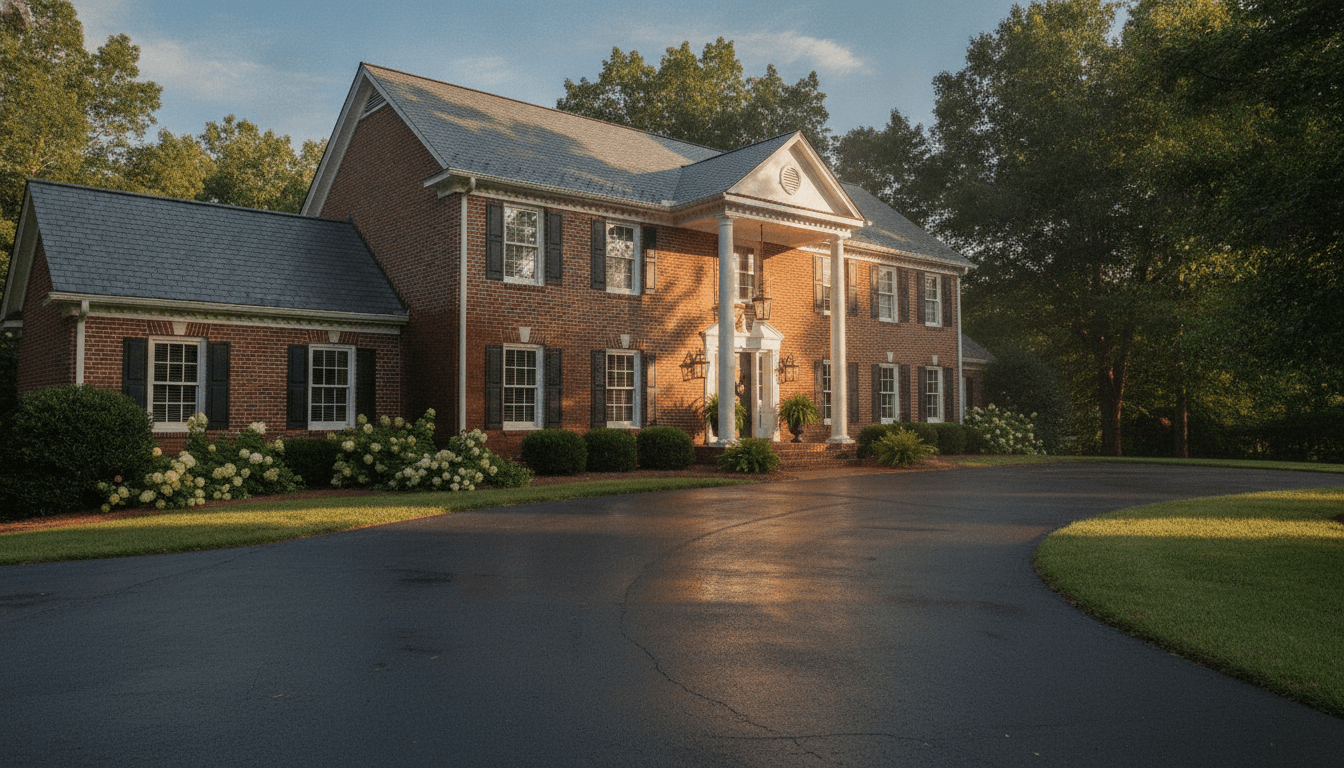
Tennessee builds with brick more than most states, and that single fact changes what exterior cleaning costs here. Brick tolerates real pressure, cleans faster than vinyl in most cases, and rarely needs the chemistry a soft wash requires. A brick ranch in Nashville often washes for $75 to $150 less than an identically sized vinyl home two streets over.
Statewide in 2026, a house wash runs $225 to $575, a driveway runs $125 to $300, and a full property package including siding, concrete, and gutter faces lands between $600 and $1,200. Roof soft washing is priced separately at $425 to $950.
Humidity is what drives the demand. Summer dew points across Middle and West Tennessee sit in the low 70s for weeks, and any wall that stays shaded holds enough moisture to grow algae. Most Tennessee homes need attention every 18 to 24 months.
What Your Siding Type Costs to Clean
Brick is the cheapest surface to clean when the mortar is sound. Moderate pressure lifts the dirt without chemistry, and a 2,000 square foot brick home washes in two to three hours at $200 to $400. The exception is painted brick, which needs a soft wash because pressure will peel paint off it in sheets.
Vinyl siding costs slightly more because it has to be soft washed. That means low pressure, roughly 100 to 500 PSI, plus a diluted sodium hypochlorite solution and a surfactant to kill the growth rather than blast it off. A 2,400 square foot vinyl two-story runs $350 to $600.
Fiber cement, which builders have used across Franklin, Brentwood, and the Knoxville suburbs since the 2000s, also needs the soft wash approach. It holds up well chemically. What it does not tolerate is a concentrated stream at the butt joints, which pushes water behind the boards.
Older painted wood in Memphis, Jackson, and the historic districts of Knoxville and Chattanooga is the most delicate surface in the state. Anything above a garden hose lifts paint, so cleaning it is low pressure, mild solution, and hand work at $450 to $900 for a modest home.
City by City, What Crews Charge
Nashville and Williamson County sit at the top of the state's range. Growth pushed labor rates up, and a 2,500 square foot home there runs $425 to $650 while the same house in Clarksville runs $325 to $500.
Knoxville and Chattanooga fall in the middle. Both cities have a lot of hillside lots, and access is the local premium. A house where the crew has to run 150 feet of hose up a slope, or work off a lower terrace to reach the back elevation, adds an hour or two of labor.
Memphis prices near the state average with one local factor. Homes near the river and in the older midtown neighborhoods deal with sustained humidity and more mature tree canopy, which means growth returns faster and annual cleaning makes more sense than an 18-month cycle.
The Tri-Cities and rural counties are the value end at 10 to 20 percent below the state average, though properties more than 25 minutes from the nearest crew usually see a $50 to $125 trip charge or a job minimum.
Concrete, Retaining Walls, and Hillside Access
Driveway cleaning runs $0.12 to $0.28 per square foot. A standard 600 square foot pad costs $75 to $170 bundled with a house wash and $125 to $300 as a standalone visit.
Tennessee concrete picks up a specific gray-green film in shaded areas that is algae rather than dirt, and it makes walkways slick. Getting it off is a pressure job with a surface cleaner, which is the round attachment that produces even results instead of the zebra stripes a wand leaves behind. Ask whether the company uses one.
Retaining walls are common in East Tennessee and in the hilly parts of Nashville. Segmental block walls clean at $0.30 to $0.60 per square foot, and the crew has to work carefully at the caps where high pressure can dislodge the adhesive.
Steep driveways add cost in a way most homeowners do not anticipate. Runoff carries dirty water and cleaning solution downhill toward the garage or the street, so the crew has to work from the top down and manage where the water goes. That is slower, and slower is more expensive.
Roof Streaks and Gutter Faces
Those black streaks running down Tennessee roofs are an algae that feeds on the limestone filler in asphalt shingles. It shows up on most roofs in the state within eight to ten years, and it appears on the north slope first.
Soft washing a 2,000 square foot roof runs $425 to $950. High pressure on shingles removes the granules that carry UV protection and the fire rating, and manufacturers exclude pressure-cleaning damage from their warranties. Any company offering to pressure wash your shingles has told you what you need to know.
Gutter brightening is a separate line item at $1.00 to $2.50 per linear foot. The black vertical striping on the outside face is oxidized aluminum mixed with road film, and removing it takes a dedicated product and hand agitation rather than more pressure.
Licensing Rules That Vary by Tennessee County
Tennessee requires a state contractor license for projects at $25,000 and above, which most pressure washing jobs never reach. There is a second tier worth knowing about though.
The state's Home Improvement license applies to residential improvement contracts between $3,000 and $24,999 in specific counties, including Davidson, Knox, Shelby, Hamilton, Rutherford, Robertson, Bradley, Marion, and White. If your project bundles washing with sealing, staining, or repairs and crosses that threshold, ask whether the contractor holds it.
Insurance is the screen that matters on every job regardless of size. Ask for a certificate of general liability at $1,000,000 or more, sent to you directly from the agency rather than forwarded from the contractor's phone. Workers' compensation matters too if anyone will be on a ladder or a roof.
Get the scope in writing with each surface priced individually. A quote reading "wash house and drive" leaves soffits, gutter faces, porch ceilings, and the rear elevation open to interpretation, and that ambiguity is where disputes come from.
Comparing three bids on identical scope is the fastest way to spot an outlier. Our listings of pressure washing companies serving Tennessee cities are organized by location, and our other Tennessee home service cost guides use the same side-by-side approach for roofing and gutters.
Protecting Plants, Windows, and Water Supply
Sodium hypochlorite at soft wash strength burns foliage. Tennessee landscaping tends to run dense against the foundation with boxwoods, hollies, and hydrangeas, and all three react quickly. A competent crew pre-wets the beds, tarps what it can, and rinses everything afterward.
Windows should be rinsed at the end. Solution allowed to dry on glass leaves a haze that takes a second cleaning to remove, and it is the most common complaint in negative reviews for this trade.
Tell the contractor if you are on a well. Rural Tennessee properties frequently are, and a low-recovery well cannot sustain a continuous four to eight gallon per minute draw. Given notice, the company brings a buffer tank instead of running your pump hard.
Best Time to Schedule in Tennessee
Late April through early June is the busiest window, after oak and hickory pollen finish. Book three weeks ahead if you want that timing.
September and October are the smarter months for most homeowners. Humidity drops, drying conditions improve, crews have availability, and discounts of 10 to 15 percent are common as companies fill fall schedules.
Tennessee winters allow soft washing on mild days in the western and middle parts of the state. Most companies stop when temperatures fall below the low 40s, since cleaning solutions lose effectiveness in the cold and runoff refreezes on walkways and steps.
Questions Tennessee Homeowners Ask
How often should a Tennessee house be pressure washed?
Every 18 to 24 months for most homes, and annually for anything under heavy tree canopy or in the more humid western part of the state. Visible green on the shaded side means you are already past due.
Is it safe to pressure wash brick?
Yes when the mortar is sound and the pressure is moderate. Homes built before roughly 1930 often have soft lime mortar that erodes under pressure, so those should be washed at low pressure with a test area first.
Why does my driveway look striped after cleaning?
That pattern comes from cleaning with a wand instead of a rotating surface cleaner. Ask specifically whether the company uses a surface cleaner on flat concrete, since the fix is redoing the whole slab.
What does it cost to clean a deck in Tennessee?
Cleaning and brightening runs $1.50 to $3.00 per square foot, so a 300 square foot deck lands at $450 to $900. Adding stain or sealer roughly doubles that and has to wait two or three days for the wood to dry.
Will a soft wash keep the algae from coming back?
It kills what is growing and typically buys 12 to 24 months depending on shade and exposure. Nothing prevents regrowth permanently in Tennessee humidity, though some companies offer a treated finish rinse that stretches the interval.