electricians
Electrical Panel Upgrade Cost in Tennessee: 2026 Prices, TVA Territory, and All-Electric Homes at Capacity
Electrical panel upgrade cost in Tennessee for 2026: 200 amp pricing, all-electric load limits, TVA local power company timelines, storm backup, permits, and licensing.
In This Article
Electrical Panel Upgrade Cost in Tennessee: 2026 Prices, TVA Territory, and All-Electric Homes at Capacity
Tennessee homeowners pay $2,200 to $4,800 for a 200 amp panel replacement in 2026 when the existing meter base and service conductors stay in place. A full service change, with new exterior equipment, runs $3,500 to $7,900. Nashville and Williamson County price above both ranges, while Chattanooga, Knoxville, and the Tri-Cities sit closer to the middle and rural West Tennessee runs lowest.
What makes Tennessee different from most states is how electric the housing is. TVA power kept residential electric rates low for decades, and builders across the state responded by putting in all-electric homes: heat pump, electric water heater, electric range, electric dryer. Those houses were sized for exactly that load and nothing more.
Add a Level 2 charger, a shop in the garage, or a finished basement to a 1980s all-electric house on 100 amp service and the panel is out of room. That is the call most Tennessee electricians are answering this year.
All-Electric Houses and Where the Capacity Went
Heat pumps with electric resistance backup are the default heating system across most of Tennessee, and those strip heat elements are the largest single load in the house. A 15 kilowatt strip heater draws roughly 60 amps by itself, and it runs on the January mornings when everything else in the house is running too.
An electric water heater adds 30 amps, a range adds 40 or 50, and a dryer adds 30. Before anything modern gets connected, an all-electric Tennessee house has already committed most of a 100 amp service on paper.
That is why the load calculation matters more here than in states where gas carries the heating and cooking. An electrician who quotes a service size without running one is estimating, and in an all-electric house the estimate is usually wrong in the expensive direction.
What a Complete Quote Covers
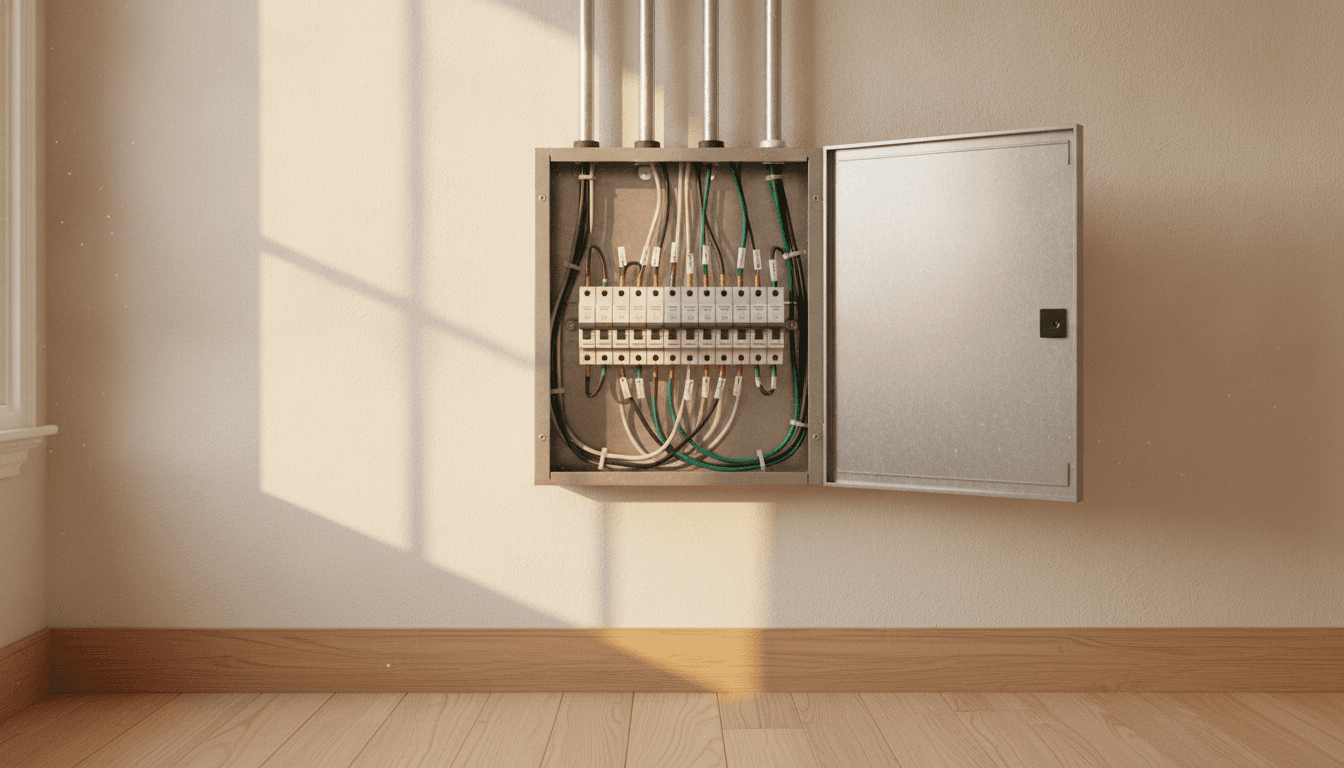
The base scope should list the load center, breakers matched to each existing circuit, driven grounding electrodes, bonding at the water piping, a labeled directory, the permit, and the inspection. Moving 24 or more circuits into a new enclosure takes most of a working day.
Arc fault and ground fault breakers move the price more than anything else on the list. Tennessee builds on the National Electrical Code, and current requirements put protection on far more circuits than a 1980s panel has. Twenty protected breakers instead of twenty standard ones can swing a bid $700 to $1,500.
Panel Change Versus Service Change
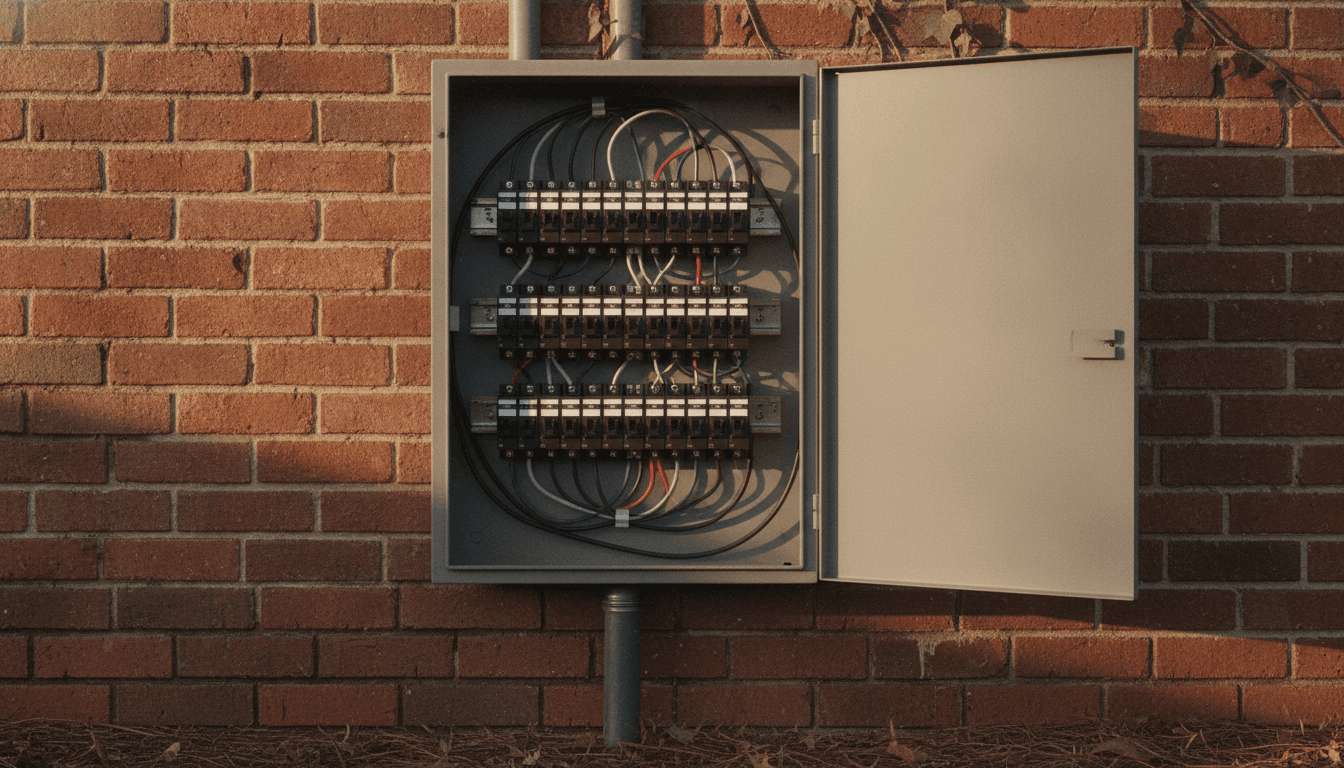
A panel change replaces the interior equipment and leaves the mast, meter base, and service conductors alone, which works when that exterior equipment is already rated for 200 amps. That is the one-day version of this job.
A service change replaces the outside equipment as well, and it requires the utility to pull the meter, the local inspector to sign off, and the utility to reset. That sequence stretches the project across two to five weeks even though the labor is still a single day.
TVA, Local Power Companies, and Scheduling
TVA generates the power, but you are a customer of a local power company, and that is who controls your schedule. Nashville Electric Service, Knoxville Utilities Board, Memphis Light Gas and Water, EPB in Chattanooga, and dozens of municipal systems and cooperatives each run their own disconnect and reconnect process.
Where the meter base stays in place, most Tennessee local power companies will authorize a same-day meter pull and reset, which is why a panel-only replacement can be scheduled quickly. Where new exterior equipment goes in, the timeline stretches while the disconnect is scheduled and the inspection is passed.
Ownership of the equipment splits differently by utility. On overhead services, the homeowner generally owns the mast, weatherhead, and meter can while the utility owns the drop to it. Some Tennessee systems will replace a meter base themselves and others require the electrician to do it, and the answer changes the quote.
Rural cooperative territory adds travel. An electrician driving into Perry, Hancock, or Lake County builds a trip charge of $150 to $400 into the number, and there are fewer contractors competing for the work.
Storms, Outages, and Backup Power
Tennessee sits in an active severe weather corridor, and the outage causes stack up across the year. Spring and fall tornado outbreaks in West and Middle Tennessee, summer derecho events, and winter ice storms in the eastern mountains all take lines down for days.
Because so many houses here heat with electricity, a February ice storm outage is a heating emergency rather than an inconvenience. That is the practical case for building a backup connection into a panel job while the enclosure is already open.
A generator interlock kit installed alongside a new panel runs $700 to $1,500. A manual transfer switch with its own circuit list runs $1,200 to $2,600. Both are far cheaper as part of a panel replacement than as a separate call in November.
Whole-house standby generators run $8,000 to $18,000 installed on natural gas in the metro areas, and more where a propane tank has to be set, which covers much of rural Tennessee. Sizing depends on whether you want the whole house or a selected list of circuits, and an all-electric house with strip heat needs a much larger unit than a gas-heated one.
Older Housing and What Turns Up Behind the Cover
Memphis, Knoxville, and Chattanooga all have significant pre-1960 housing, and those homes bring their own findings. Fuse boxes still exist here, and no insurer will write a policy on one, so replacement is the only path.
Federal Pacific Stab-Lok and Zinsco panels went into Tennessee homes built from the late 1950s through the early 1980s. Several carriers writing homeowners policies in the state decline to bind coverage on them, and home inspectors flag them on nearly every resale report.
Aluminum branch circuit wiring, used roughly between 1965 and 1973, requires approved connectors at every device and every termination. Finding it during a panel replacement adds cost, and it should be documented in writing with a price before the work starts rather than negotiated with the power off.
Crawl spaces are the norm in most of Tennessee, and circuits get run under the floor rather than through walls. That is faster labor, though a crawl space access charge on a quote is legitimate, and humidity down there corrodes ground clamps and cable staples over time.
Licensing, Permits, and Comparing Bids
Tennessee licenses contractors through the Board for Licensing Contractors, and electrical contractors performing work above the state threshold need a license with the CE classification. Cities and counties also issue local licenses and permits. Confirm the business name on your quote matches the state license, and check the monetary limit on that license against your job.
Permits come from your county or city codes department, and residential electrical service permits generally run $75 to $300. Nashville, Memphis, Knoxville, and Chattanooga each run their own process. Your contractor should pull the permit, and one who asks you to pull it as a homeowner is transferring liability.
Three bids compare only when each one itemizes the same items: the meter base, the breaker count, the permit fee, and any backup power provisions. Putting a short list of licensed Tennessee electricians on one written scope is how a missing $900 line becomes visible, and our Tennessee home services cost guides cover the trades that usually follow this one.
Frequently Asked Questions
How much does a 200 amp panel upgrade cost in Tennessee?
Budget $2,200 to $4,800 when the meter base and service conductors can stay, and $3,500 to $7,900 for a full service change. Nashville and Williamson County run above both ranges, and rural West Tennessee generally runs lowest.
Will 100 amp service support an all-electric house with an EV charger?
Usually not. A heat pump with 15 kilowatts of strip heat draws roughly 60 amps by itself, and adding a 40 or 50 amp charger circuit on top will fail a load calculation on most 100 amp services.
Who do I call about disconnecting power, TVA or my utility?
Your local power company. TVA generates and transmits the power, but Nashville Electric Service, Knoxville Utilities Board, Memphis Light Gas and Water, EPB, and the municipal and cooperative systems each handle their own meter pulls and reconnects.
Do I need a permit for panel work in Tennessee?
Yes. Your county or city codes department issues the electrical permit, generally $75 to $300 for a residential service, and the passed inspection is what allows the utility to reset the meter.
Is a generator worth adding during a panel upgrade?
If you heat with electricity, the case is strong, since a winter ice storm outage in Tennessee is a heating problem. An interlock kit installed during the panel job runs $700 to $1,500, which is far less than adding it as a separate visit later.