pest-control
Brown Recluse Spiders in Tennessee: Identification, Risk, and Control
Brown recluse spiders are established in every Tennessee county. Learn how to identify them, what a bite can do, and the control plan that works.
In This Article
Brown Recluse Spiders in Tennessee: Identification, Risk, and Control
Tennessee sits in the heart of the brown recluse's native range, and the spider is established in all 95 counties. Homes in Memphis, Jackson, Nashville, and Clarksville produce some of the heaviest infestations pest control companies see anywhere in the country.
The spider itself is shy, bites are uncommon, and even a house with a large population can be brought under control. What does not work is the typical response of one can of spray, a fogger, and hope. Plenty of Tennessee homeowners live with recluses for years without an incident, but nobody enjoys sharing an attic with them.
Start with identification, because most brown recluse sightings in Tennessee turn out to be something else entirely.
How to Identify a Brown Recluse
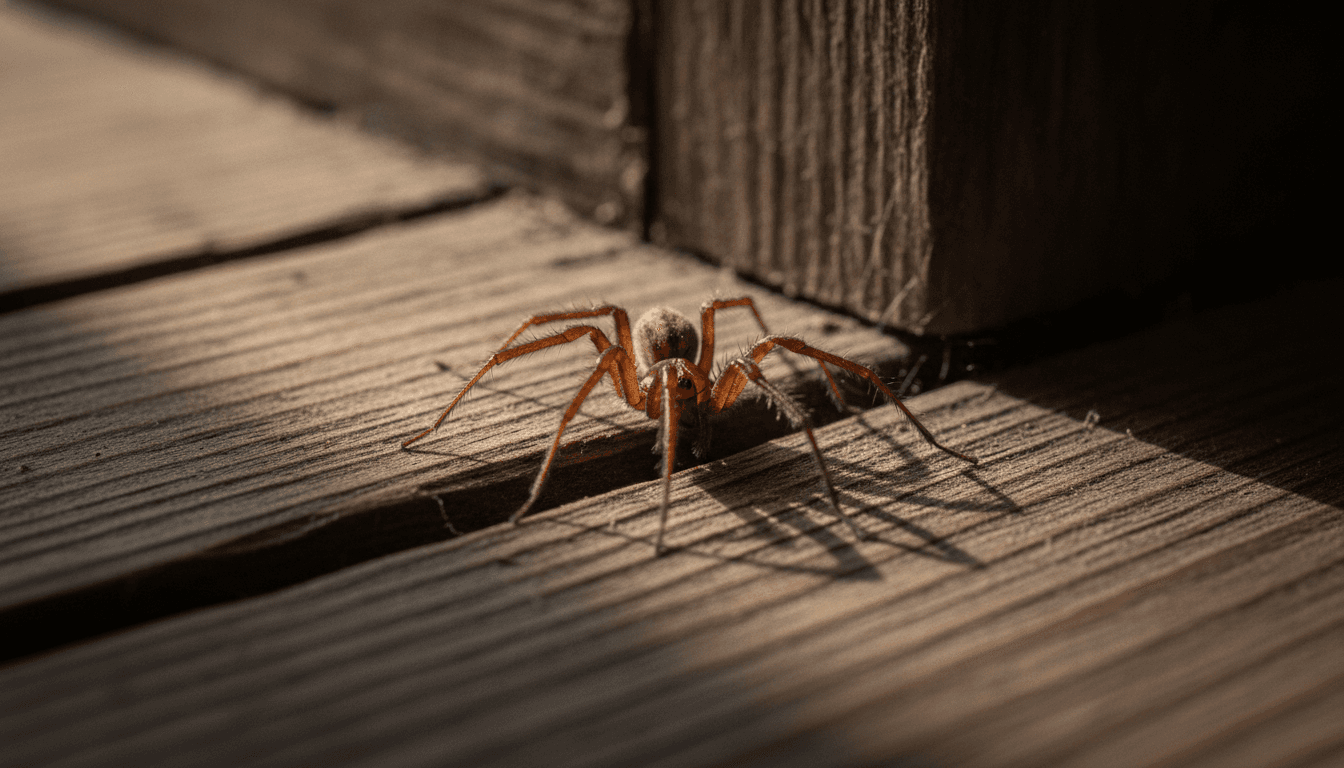
An adult brown recluse is about the size of a quarter with legs extended, with a body around three eighths of an inch long. The color runs tan to dark brown, and the legs are smooth, uniform in color, and free of the spines or bands you see on many common spiders.
The famous violin marking behind the head is real but overrated. Young recluses may not show it clearly, and several harmless spiders wear dark markings that a nervous homeowner reads as a violin.
Eyes are the more dependable feature. A brown recluse has six arranged in three pairs, while almost every other spider in a Tennessee house has eight. You need good light or a zoomed-in photo to check, but it settles the question.
Spiders That Take the Blame
Wolf spiders, funnel weavers, and male southern house spiders account for most mistaken recluse reports in Tennessee. Wolf spiders are hairier and faster, funnel weavers have banded legs, and house spiders build the messy webs a recluse never would.
A recluse web, when you find one at all, is a flat patch of off-white silk tucked in a hidden corner, not a snare built to catch prey. The spider hunts on foot at night, which is exactly why glue traps work so well against it.
Where Recluses Live in Tennessee Homes
West and Middle Tennessee carry the heaviest populations, and entomologists have described Memphis as one of the most recluse-dense cities in the nation. East Tennessee has them too, though homes in Knoxville and Chattanooga tend to report lighter numbers.
Inside a house, recluses want dark, dry, undisturbed space. Attics, wall voids, basements, crawl spaces, closet floors, and the backs of garages are their standard territory.
Cardboard is their favorite material. Boxes of holiday decorations, stored clothing, and stacks of paper in the attic function as recluse housing, which is how a long-settled home in an older neighborhood can hold hundreds of spiders without the owners ever seeing one.
Populations also spread the way everything spreads, by riding along. Recluses travel between buildings in moving boxes, furniture, and storage totes, which is worth remembering when you load a truck out of an infested house or pull items from a self-storage unit in Memphis or Jackson.
What a Brown Recluse Bite Can Do
Most brown recluse bites heal on their own. Reviews of confirmed bites show the majority cause a small red lesion that fades within a week or two, and many people never realize a spider was involved.
A minority of bites turn necrotic, meaning the venom kills tissue around the site and leaves a slow-healing ulcer. Whole-body reactions are rarer still and appear most often in young children, which is worth taking seriously in a state with this many recluses.
First aid is simple: wash the site with soap and water, apply ice, and elevate the limb. Skip the folk remedies, since cutting, suction, and heat all make tissue damage worse.
See a doctor if a suspected bite develops a dark or sunken center, spreading pain, fever, or chills. Bring the spider if you can collect it safely, because a confirmed identification changes treatment and rules out infections like MRSA that get mislabeled as spider bites all the time.
How Bites Usually Happen
Recluses bite when pressed against skin, not to defend territory. The classic Tennessee bite happens in bed, inside a shoe, or in clothing that spent the night on a closet floor.
Shaking out shoes and clothes, pulling the bed a few inches off the wall, and keeping bedding off the floor prevent most bites even in an infested house. Habits do more here than any chemical.
Confirming an Infestation with Glue Traps
Flat glue traps cost a few dollars at any Tennessee hardware store, and they are the single best diagnostic tool for this spider. Place them flush against baseboards in closets, behind furniture, in the garage, and up in the attic, since recluses travel along edges.
Check the traps weekly for about a month. One or two adult catches suggest a small population, while traps loaded with recluses of mixed sizes point to a breeding infestation that has been in the structure for years.
Plan on more traps than feels reasonable, since serious recluse programs use 30 or more per house. Researchers working one badly infested Midwestern home collected more than 2,000 recluses in a matter of months, most of them on simple sticky cards.
Spreading traps through every room also maps the problem. Heavy catches in the attic and garage alongside clean traps in the bedrooms tell you the living space is defensible, and that shapes how aggressive the treatment plan needs to be.
Control That Works and What It Costs
No spray eliminates a brown recluse population in one visit, and a company that promises a one-and-done fix is not being straight with you. Effective control stacks several methods and runs for months.
Part of the reason is the spider's biology. A recluse can survive many months without food or water, a female needs to mate only once to keep producing egg sacs, and individuals commonly live two years or more.
Recluses also shrug off standard sprays better than most house spiders. They walk on the tips of their legs, picking up little residue from treated surfaces, and they spend most of their lives inside voids a spray can never reach.
Decluttering comes first. Cardboard gets replaced with sealed plastic totes, stored fabric gets laundered and bagged, and attic and garage clutter goes out, which strips away harborage no pesticide can reach.
Professionals then apply residual dusts into cracks, voids, and attic insulation, treat baseboards and harborage edges, and place dozens of glue traps for both control and monitoring. An initial recluse-focused service in Tennessee typically runs $300 to $600, with follow-up visits in the $75 to $150 range.
Severe infestations in large or cluttered homes cost more, and some Memphis-area firms sell whole-structure programs that approach $1,000. Compare plans from a few licensed pest control companies serving Tennessee and ask each how they treat the attic, because that is usually where the population lives.
Keeping Them Out for Good
Sealing the structure is slow work that pays off. Weatherstrip exterior doors, screen the attic vents, caulk gaps around pipe and cable penetrations, and fix the gap under the garage door, which is a main entry point for recluses statewide.
Outdoors, move firewood, lumber, and stacked stone away from the foundation. Recluses shelter under bark and in woodpiles across Tennessee, and every pile touching the house works like a bridge inside.
Pay extra attention to the storage you touch least. A closet opened daily is far less attractive than the guest room closet nobody enters, so rotate stored items occasionally and vacuum corners, cracks, and baseboards while you are in there.
Leave a few glue traps down permanently in the garage, attic, and closets after treatment ends. They cost almost nothing and give you early warning if the population rebounds. For more guides on spiders and the other pests Tennessee homes deal with, browse our Tennessee home services blog.
Frequently Asked Questions
Are brown recluse bites ever fatal?
Deaths are vanishingly rare, and nearly all documented cases involve small children. For a healthy adult the realistic worst case is a necrotic wound that takes weeks to heal, which calls for a doctor visit rather than panic.
When are brown recluses most active in Tennessee?
Activity runs March through October and peaks in early summer, when males wander in search of females. That is when glue trap catches spike in Memphis and Nashville homes, and it is the best window for judging the size of your population.
Do foggers kill brown recluses?
No. The mist from a fogger never reaches the wall voids and attic insulation where recluses hide, and it can scatter spiders into rooms they had not colonized yet.
Can I handle a recluse problem myself?
A small population responds to decluttering, sealing, and a heavy glue trap program, so DIY is reasonable when traps catch only a spider or two. Once traps show dozens of catches or spiders of mixed ages, professional treatment earns its price.
Do brown recluses live outside in Tennessee?
Yes. They are native to the state's woodlands and shelter under bark, rocks, and woodpiles year-round, and that outdoor reservoir is why sealing the exterior matters as much as anything you do indoors.